Disc Herniation Information
Holistic Chiropractic Care for Disc Herniations
Living with a disc herniation can be painful, frustrating, and overwhelming. Whether you’ve recently been diagnosed or have been struggling with chronic neck or back pain for years, it’s easy to feel uncertain about your options.
At Centered Soul Chiropractic, our goal is to help reduce pain, and help you understand how your spine, muscles, joints, and nervous system are working together to help you heal and function at your highest potential.
Dr. Michael Baba’s journey into chiropractic began through his own recovery from multiple disc herniations. Having experienced the physical limitations, emotional challenges, and uncertainty that often accompany spinal injuries, he understands firsthand what many patients are going through. Today, he is passionate about helping others recover naturally through personalized chiropractic care that addresses both the structural, neurological and mental emotional aspects of healing.
Whether you’re experiencing neck pain, low back pain, sciatica, numbness, tingling, or limited mobility, we’re here to help you understand your condition and create a plan focused on long-term recovery.
What Is a Disc Herniation?
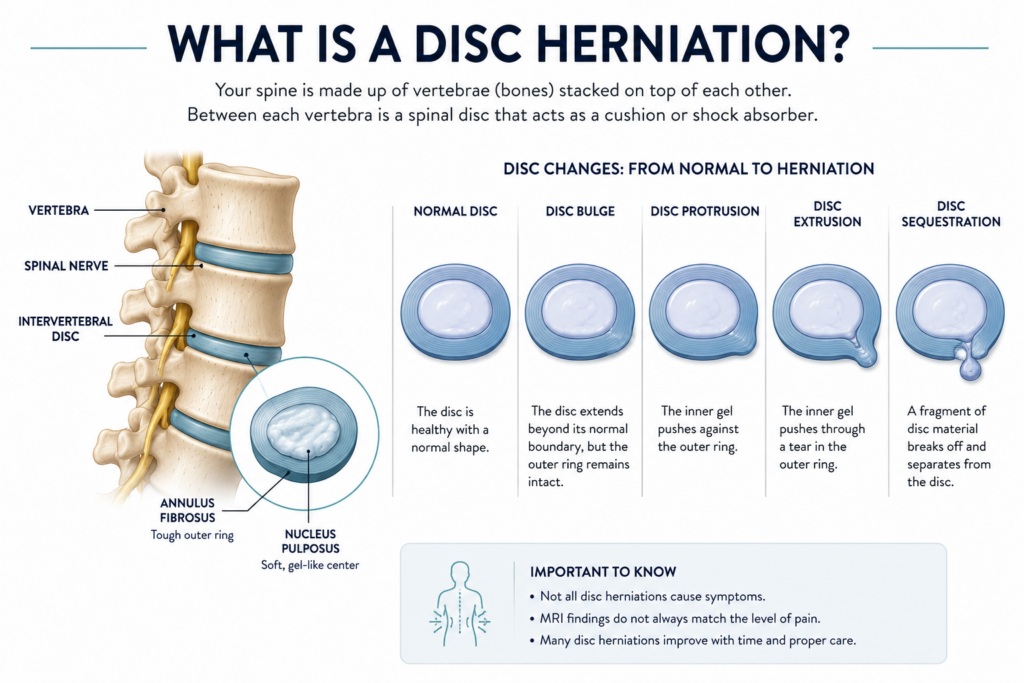
Between each vertebra in your spine sits an intervertebral disc. These discs act as cushions that absorb shock, allow movement, and help distribute forces throughout the spine.
Each disc has two main parts:
Annulus Fibrosus – the tough outer ring made of strong connective tissue.
Nucleus Pulposus – the soft, gel-like center that provides cushioning.
A disc herniation occurs when the outer layer develops a tear or weakness, allowing some of the inner material to push outward. Depending on the location and severity, this can irritate nearby nerves and contribute to pain, numbness, tingling, or weakness.
Not every disc herniation causes symptoms. In fact, many people have disc changes visible on MRI without experiencing pain. This is why a thorough examination and understanding of your symptoms are just as important as imaging.
Disc Bulge vs. Disc Herniation: What’s the Difference?
Many people hear terms like bulging disc, protrusion, or herniation and assume they all mean the same thing. While they are related, they describe different stages of disc changes.
Disc Bulge
The disc extends beyond its normal boundaries but the outer fibers remain intact.
Disc Protrusion
A portion of the disc pushes farther outward while remaining contained within the outer layer.
Disc Extrusion
The inner disc material breaks through the outer fibers but remains connected to the disc.
Disc Sequestration
A fragment of disc material separates completely from the original disc.
These findings help healthcare providers understand the condition, but the severity of an MRI does not always predict the amount of pain someone experiences. Many people with significant MRI findings have minimal symptoms, while others with relatively small herniations may experience considerable discomfort.
Common Symptoms of a Disc Herniation
Symptoms depend on which part of the spine is affected and whether nearby nerves become irritated.
Cervical Disc Herniation (Neck)
You may experience:
Neck pain
Pain radiating into the shoulder or arm
Numbness or tingling in the hands or fingers
Muscle weakness
Reduced neck mobility
Headaches
Pain when looking up or turning your head
Lumbar Disc Herniation (Low Back)
Common symptoms include:
Low back pain
Sciatica
Pain into the buttock or leg
Numbness or tingling in the foot
Muscle weakness
Difficulty standing upright
Pain with prolonged sitting
Pain when bending or lifting
Why Do Disc Herniations Occur?
Disc injuries rarely happen because of one single event alone.
Common contributing factors include:
Repetitive bending or lifting
Sports injuries
Poor movement mechanics
Prolonged sitting
Motor vehicle accidents
Falls
Age-related changes
Reduced spinal mobility
Muscle imbalances
Physical stress
While one movement may trigger symptoms, the body often develops compensation patterns long before pain begins.
Our goal is to understand not only where your pain is coming from, but also why your body became vulnerable to injury in the first place.
Our Philosophy: We Don’t Just Treat the Disc
A disc herniation is one piece of a much larger picture.
When someone experiences pain, the body naturally creates protective patterns. Muscles tighten, movement changes, joints become restricted, and the nervous system often becomes more sensitive. Over time, these adaptations can contribute to ongoing discomfort even as the original injury begins to heal.
Rather than focusing solely on the disc itself, we evaluate:
Spinal mobility
Joint mechanics
Muscle coordination
Fascial tension
Nervous system function
Movement patterns
Lifestyle factors that influence recovery
Our philosophy is simple:
The least amount of force for the greatest amount of change.
By helping restore healthy movement and communication throughout the body, we aim to support your natural healing process while helping reduce unnecessary stress on injured tissues.
Our Approach to Disc Herniation Recovery
Every patient receives an individualized treatment plan based on their history, examination, goals, and current stage of healing.
Chiropractic Adjustments
Gentle chiropractic adjustments help restore healthy joint motion, improve spinal mechanics, and reduce abnormal stress throughout the spine.
Our approach is always tailored to your comfort level and clinical presentation.
Soft Tissue Therapy
Muscles surrounding an injured disc often become tight and protective.
Soft tissue techniques may help:
Reduce muscular tension
Improve mobility
Support healthier movement patterns
Decrease stress on the spine
Myofascial Release
The body’s connective tissue can become restricted following injury.
Myofascial techniques help improve tissue mobility and restore balanced movement throughout the body.
Nervous System-Focused Care
Pain is not only a structural experience—it is also processed through the nervous system.
Our care emphasizes helping your nervous system become more adaptable by supporting healthy movement, improving body awareness, and reducing protective tension patterns. As your body regains confidence in movement, everyday activities often become easier and more comfortable.
Movement & Rehabilitation
Recovery continues between visits.
When appropriate, we provide individualized exercises and movement strategies designed to improve spinal stability, increase confidence in movement, and support long-term health.
Lifestyle Guidance
Healing is influenced by many factors beyond treatment alone.
Depending on your needs, recommendations may include:
Walking and gentle movement
Ergonomic strategies
Sleep positioning
Stress management
Hydration
Activity modification
Progressive return to exercise
Can Disc Herniations Heal Naturally?
In many cases, yes.
Research has shown that many disc herniations improve over time, and the body may naturally reduce inflammation and even reabsorb portions of some herniated discs. Symptoms often improve before imaging findings change.
Recovery depends on many individual factors, including the nature of the injury, your overall health, activity level, and how consistently you follow your treatment plan.
While every case is unique and outcomes cannot be guaranteed, many people are able to return to active lifestyles with appropriate conservative care.
When Should You Seek Chiropractic Care?
You may benefit from an evaluation if you’re experiencing:
Neck pain
Low back pain
Sciatica
Pain after lifting
Arm or leg numbness
Tingling sensations
Difficulty moving
Recurrent episodes of back pain
Persistent pain that is limiting your daily activities
The sooner the underlying movement dysfunction is identified, the sooner an appropriate plan can be developed.
When Should You Seek Immediate Medical Attention?
Some symptoms require urgent medical evaluation.
Seek immediate medical care if you experience:
Loss of bowel or bladder control
Numbness in the groin or saddle area
Rapidly worsening weakness
Significant trauma with severe spinal pain
Fever accompanied by severe back pain
Unexplained weight loss with persistent spinal pain
These symptoms may indicate conditions requiring emergency medical assessment.
Frequently Asked Questions
Can chiropractic help a herniated disc?
Many people seek chiropractic care as part of a conservative treatment plan for disc-related pain. Your chiropractor will evaluate whether chiropractic care is appropriate based on your symptoms, examination findings, and overall health.
Will I need surgery?
Not everyone with a disc herniation requires surgery. Treatment recommendations depend on the severity of symptoms, neurological findings, and your response to conservative care. If your condition suggests that additional medical evaluation is appropriate, we will discuss those recommendations with you.
Can I still exercise?
Often, yes. The type and intensity of exercise should be individualized. Remaining appropriately active is beneficial for many people, while certain movements may need to be temporarily modified during recovery.
Is walking good for a disc herniation?
Walking is often one of the best tolerated activities and may help maintain mobility and circulation. Recommendations vary based on the individual and should be adjusted according to symptoms.
Do I need an MRI?
Not always. Many disc injuries can be evaluated through a detailed history and physical examination. Imaging may be recommended if symptoms are severe, persistent, or suggest a condition requiring further medical investigation.
Can a disc herniation come back?
A previous disc injury can increase the risk of recurrence, which is why restoring healthy movement patterns, spinal function, and long-term conditioning is an important part of recovery.
Why Choose Centered Soul Chiropractic?
Dr. Michael Baba understands the challenges of disc injuries because he has lived through them himself.
His own recovery from multiple disc herniations inspired him to pursue chiropractic and dedicate his career to helping others regain their health naturally.
Patients appreciate his personalized approach, which blends:
Holistic chiropractic care
Gentle spinal adjustments
Soft tissue therapy
Myofascial techniques
Nervous system-focused care
Movement education
Individualized treatment plans
Every patient is different, and every treatment plan is designed around your unique goals, lifestyle, and stage of recovery.
Ready to Begin Your Recovery?
If you’re experiencing neck pain, back pain, sciatica, or symptoms related to a disc herniation, we’d love to help you better understand what’s happening and discuss whether our approach is right for you.